
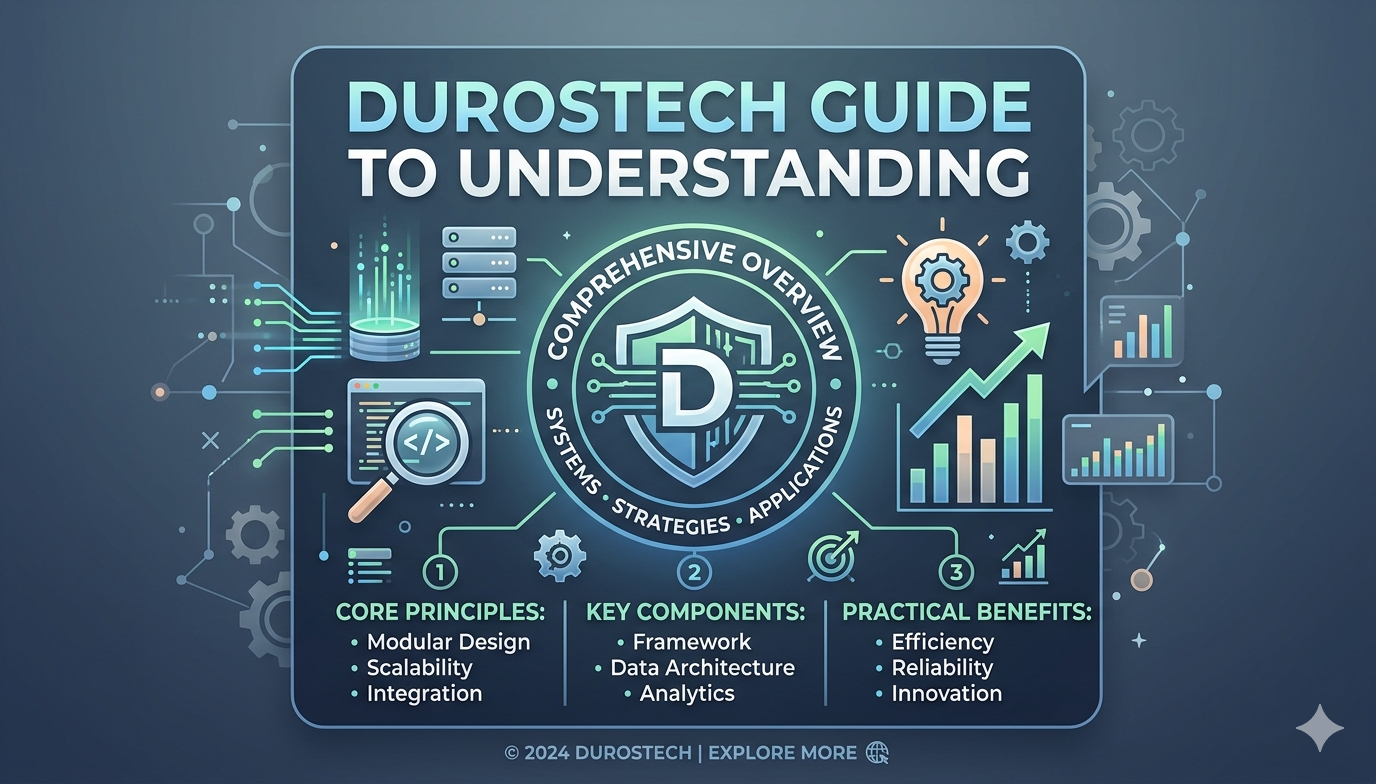
Durostech guide to understanding the complexities of modern technology is essential for anyone looking to thrive in today’s fast-paced digital world. In the United States, where technological innovation drives both business and personal life, understanding digital tools, software, and emerging trends is no longer optional—it’s a necessity.
Technology has become the backbone of communication, commerce, education, and entertainment. Yet, for many, navigating the digital landscape can be overwhelming. From artificial intelligence and cloud computing to cybersecurity and data analytics, the sheer scope of technological advancements can be daunting. This guide aims to simplify these concepts, providing a clear framework to understand and leverage technology effectively.
The Digital Landscape in the United States
The United States has long been at the forefront of technological innovation. Silicon Valley, the hub of tech startups and global giants, exemplifies the nation’s commitment to digital advancement. Companies continually innovate to deliver smarter, faster, and more accessible technology solutions.
Understanding the digital landscape requires a grasp of both current tools and emerging trends. Cloud services, artificial intelligence, and machine learning have transformed how businesses operate. Social media platforms, digital marketing tools, and e-commerce technologies have reshaped consumer behavior. Moreover, the rise of remote work has heightened the importance of digital communication and collaboration platforms.
By studying the ways technology integrates into everyday life, individuals can better anticipate changes, adopt new tools, and maintain a competitive edge. The durostech guide to understanding these shifts provides readers with structured insights to navigate the ever-changing tech ecosystem efficiently.
Key Components of Modern Technology
Modern technology can be divided into several key areas, each with its own significance and impact.
1. Artificial Intelligence and Machine Learning
Artificial intelligence (AI) and machine learning (ML) are perhaps the most transformative technologies of the 21st century. AI refers to systems capable of performing tasks that typically require human intelligence, such as visual perception, speech recognition, decision-making, and language translation. ML, a subset of AI, allows systems to learn and improve from experience without explicit programming.
In business, AI enhances decision-making by providing predictive analytics and automating routine tasks. In personal life, AI powers voice assistants, recommendation engines, and smart home devices. The durostech guide to understanding AI emphasizes the importance of ethical considerations, data privacy, and responsible implementation in maximizing AI’s potential.
2. Cloud Computing
Cloud computing allows individuals and organizations to store and access data over the internet rather than local servers or personal devices. This technology has revolutionized how businesses operate, enabling scalability, flexibility, and cost-efficiency.
Key services include Infrastructure as a Service (IaaS), Platform as a Service (PaaS), and Software as a Service (SaaS). Businesses can leverage cloud solutions to manage operations, collaborate remotely, and deploy applications globally. According to the durostech guide to understanding, mastering cloud computing fundamentals is essential for both IT professionals and non-technical users looking to optimize productivity.
3. Cybersecurity
With increased reliance on digital systems comes the need for robust cybersecurity measures. Cyber threats, including hacking, phishing, and malware, pose significant risks to personal data and corporate information.
Effective cybersecurity strategies involve multi-layered defense systems, regular software updates, employee training, and proactive threat monitoring. The durostech guide to understanding cybersecurity outlines best practices for safeguarding sensitive information while ensuring smooth operational functionality.
4. Data Analytics
Data analytics involves examining raw data to draw meaningful insights that guide decision-making. Businesses use analytics to understand consumer behavior, optimize processes, and forecast trends.
Techniques such as descriptive, diagnostic, predictive, and prescriptive analytics provide a structured approach to interpreting data. According to the durostech guide to understanding, data literacy is crucial in today’s workforce, empowering professionals to harness information for strategic advantage.

Navigating Digital Transformation
Digital transformation refers to the integration of digital technologies into all aspects of business operations. It is not just about implementing new software—it involves a cultural shift where organizations rethink processes, strategies, and customer interactions.
Companies embracing digital transformation can achieve improved efficiency, enhanced customer experiences, and increased competitiveness. Tools like enterprise resource planning (ERP), customer relationship management (CRM), and automation platforms are central to this process.
The durostech guide to understanding highlights that successful transformation requires leadership commitment, employee engagement, and continuous evaluation of technology performance. Organizations that neglect these elements risk falling behind in a rapidly evolving digital market. software updates durostech
Education and Skills Development
In the United States, technological literacy is increasingly integrated into educational curricula. Schools and universities emphasize coding, robotics, digital design, and data analytics to prepare students for future careers.
Moreover, online courses, certifications, and professional development programs allow individuals to upskill at their own pace. Platforms offering interactive tutorials and practical exercises provide learners with hands-on experience. The durostech guide to understanding stresses the importance of lifelong learning as technology continues to evolve. Staying informed and adaptable ensures personal growth and career advancement.
Emerging Trends to Watch
Technology trends emerge rapidly, often reshaping industries within years. Key trends include:
- Internet of Things (IoT): Connecting devices to create smart environments for homes, cities, and industries.
- 5G Technology: Enabling faster internet speeds and more reliable connections.
- Blockchain and Cryptocurrencies: Revolutionizing finance, data security, and digital contracts.
- Augmented Reality (AR) and Virtual Reality (VR): Transforming entertainment, education, and professional training.
The durostech guide to understanding emphasizes monitoring these trends for both business strategy and personal development. Early adopters can gain a competitive edge, while those resistant to change may miss valuable opportunities.
The Role of Ethical Technology
Ethics in technology involves ensuring that digital tools and innovations are used responsibly. Issues include data privacy, algorithmic bias, environmental impact, and accessibility.
Ethical considerations should guide the development, deployment, and regulation of technology. Companies and individuals alike must adopt practices that balance innovation with social responsibility. The durostech guide to understanding provides a framework for evaluating ethical implications, fostering trust, and promoting inclusive digital solutions.
Practical Applications of Technology
Technology impacts virtually every aspect of modern life. Examples include:
- Healthcare: Telemedicine, wearable devices, and AI diagnostics improve patient care.
- Education: E-learning platforms, virtual classrooms, and adaptive learning tools enhance accessibility.
- Business: Automation, digital marketing, and analytics streamline operations and increase profitability.
- Entertainment: Streaming services, gaming platforms, and AR/VR experiences redefine leisure.
According to the durostech guide to understanding, integrating technology thoughtfully into everyday activities enhances efficiency, creativity, and overall quality of life.
Challenges and Solutions
Despite its benefits, technology presents challenges such as digital divide, cybersecurity threats, and technological overload. Addressing these challenges involves:
- Bridging the Digital Divide: Ensuring equitable access to devices, internet, and educational resources.
- Cybersecurity Awareness: Training users to recognize threats and adopt safe practices.
- Managing Information Overload: Prioritizing digital tools, maintaining focus, and leveraging productivity apps.
The durostech guide to understanding emphasizes proactive problem-solving and adaptive strategies as key to overcoming these obstacles while maximizing technology’s potential.
Future Outlook
The pace of technological innovation shows no signs of slowing. Artificial intelligence, automation, quantum computing, and bioengineering promise to reshape industries and daily life. Preparing for the future requires flexibility, curiosity, and a commitment to continuous learning.
The durostech guide to understanding suggests that individuals and organizations who embrace change, invest in education, and engage with emerging technologies will thrive in the coming decades. Innovation is not just a trend—it is the foundation of progress and opportunity in the United States and beyond.
Conclusion
Understanding technology is no longer optional; it is fundamental to success in the digital age. From AI and cloud computing to cybersecurity and emerging trends, mastering digital tools empowers individuals and organizations to innovate, compete, and excel.
The durostech guide to understanding serves as a comprehensive framework for navigating this complex landscape, providing insights, practical strategies, and guidance on ethical technology use. By embracing digital literacy, lifelong learning, and proactive adaptation, anyone can leverage technology to achieve personal and professional growth.
In the United States, where technology shapes the economy, culture, and everyday life, these skills are more critical than ever. Harnessing the potential of digital tools will define the leaders of tomorrow, making understanding technology not just an advantage but a necessity.










Leave a Reply